
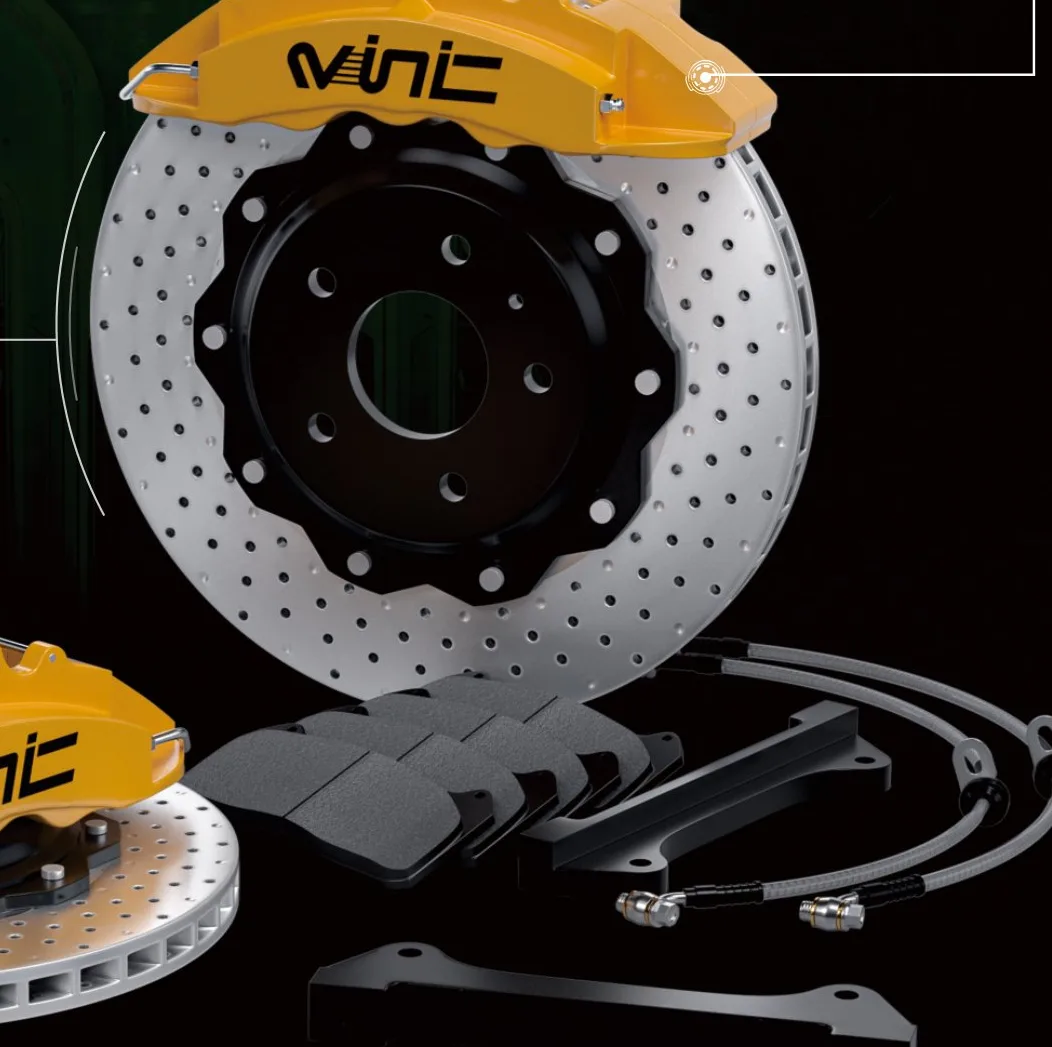

Few upgrades divide opinion like the big brake kit. Half the internet calls it a cosmetic flex; the other half will not drive a mountain road without one. Both are talking about different drivers. A BBK is not a styling part that happens to stop the car — it is a re-engineering of the weakest link in a stock braking system — but it is also genuinely unnecessary for a large slice of cars. This guide lays out what actually changes when you bolt one on, quantified where it can be, so you can decide which side of the line you are on.
The Short Answer
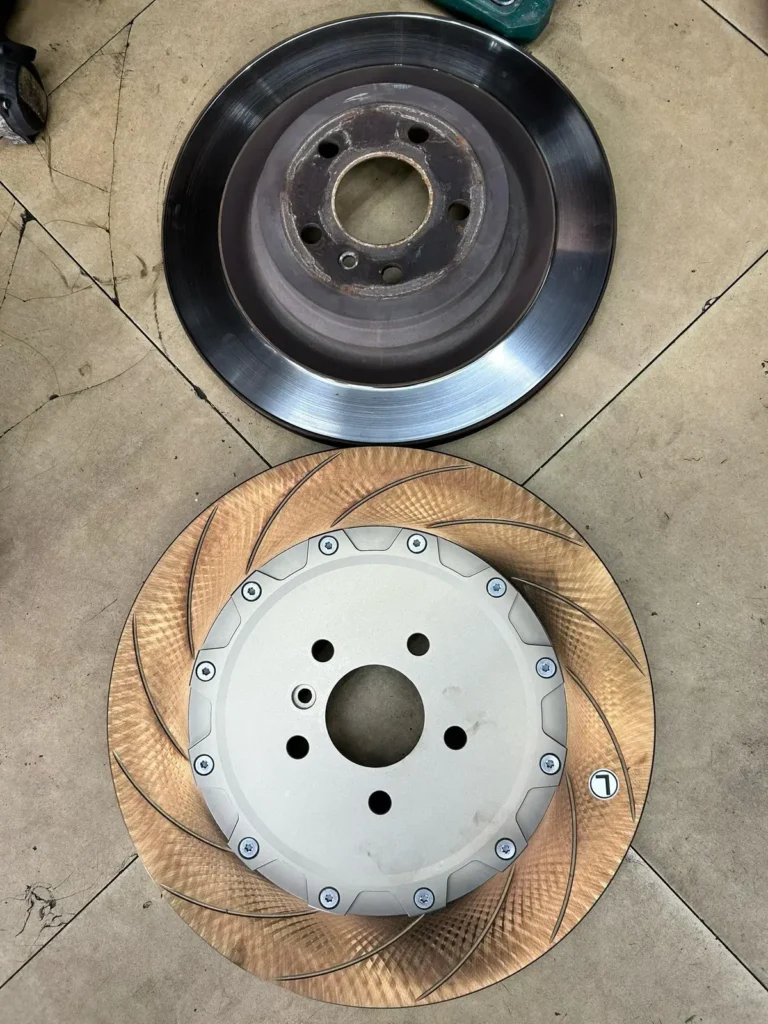
A big brake kit improves four things a stock system cannot: thermal capacity (resistance to fade), braking consistency under repeated hard stops, pedal feel and modulation, and pad choice. It does not meaningfully shorten a single emergency stop on street tires — that limit is tire grip. If you tow, drive mountains, run track days, or pilot a heavy SUV hard, a BBK is a functional upgrade that pays for itself. If you commute on stock power, quality pads and fluid are the smarter spend.
What a Stock Brake System Actually Is
Factory brakes are a cost-optimized compromise: a cast iron sliding caliper with one or two pistons pressing a modest pad against a rotor sized for the car’s weight plus a safety margin for normal driving. “Normal” is the operative word. The system is engineered to ace one 60–0 panic stop on a certification course — not ten consecutive stops from 120 mph, not a five-mile descent with a trailer, not a loaded Land Cruiser on a mountain pass. Sliding calipers also flex under high clamp load, which is where the vague, long pedal of a hard-worked stock system comes from.
What a Big Brake Kit Changes

| Dimension | Stock Brake System | Big Brake Kit |
|---|---|---|
| Caliper | Cast iron sliding caliper, 1–2 pistons, flexes under load | Forged 7075-T6 aluminum, 4–6 pistons, rigid monoblock-style clamping |
| Rotor | Sized for weight + street margin; often 280–330 mm | 285–420 mm high-carbon, slotted or drilled; far more thermal mass |
| Pad | Small swept area; limited compound choice | Larger pad, more even pressure; full sport compound range |
| Lines | Rubber — expands under heat and pressure | Braided stainless (QC/T970) — firm pedal at any temperature |
| Heat management | Adequate for one hard stop | Built for repeated hard stops — fade arrives far later |
| Pedal feel | Progressive but vague near the limit | Firm, linear, modulatable — you steer with the pedal |
| Weight | Heavy cast caliper; small rotor | Forged caliper sheds unsprung mass; larger rotor adds some back |
The Engineering, Without the Marketing
Clamping force and even pressure

Multi-piston calipers do not just press harder — they press more evenly. Pistons staggered along the pad distribute clamp load across the whole friction face, so the pad wears flat, bites consistently, and modulates predictably. The forging matters too: a 7075-T6 forged caliper body, formed under thousand-ton presses and finished on four-axis CNC machines, is dramatically stiffer than cast iron at a fraction of the weight. Stiffness is what you feel as pedal firmness — the caliper stops being a spring in the system.
Thermal capacity: the real headline
Fade is a heat problem, and heat capacity scales with mass and surface area. A 362 mm high-carbon rotor absorbs and sheds far more energy per stop than a 300 mm stock disc, and its larger sweep radius also generates more braking torque for the same clamp force. This is the change you feel on lap five of a track session or mile three of a descent: the stop you make at the bottom is the same as the one at the top. For the full heat-management picture, see our track day brake guide.
Unsprung weight and ride
The forged caliper typically weighs less than the cast slider it replaces, clawing back unsprung mass even as the rotor grows. Net effect varies by kit, but the fear that BBKs “ruin ride quality” is mostly a legacy of older cast kits. Well-engineered kits are near weight-neutral with dramatically better rigidity.
What a BBK Does NOT Do
Honesty section, because the forums will not give you one. A big brake kit will not meaningfully shorten a single maximum stop on street tires — once the tires are at their grip limit and ABS is working, brakes are no longer the constraint. It will not fix a bad pad compound (a kit with street pads still fades eventually — just later). And it will not make a numb, under-maintained system feel good if the fluid is old and the bushings are shot. The kit multiplies a healthy system’s ceiling; it does not replace maintenance.
Who Should Upgrade — and Who Should Not
| Your Profile | Verdict |
|---|---|
| Daily commuter, stock power, no towing | Skip it. Quality street pads + fresh fluid serve you better per dollar |
| Spirited driver — back roads, occasional mountain runs | Borderline. Sport pads first; kit if you fade them |
| Towing / overlanding / heavy SUV | Strong yes. Thermal capacity is your limiting factor — see our towing guide |
| Track days more than twice a year | Yes. You’ll spend kit money on consumables within two seasons anyway |
| Tuned car — +30% power or more | Yes. Stock brakes were sized for stock speed |
| Big wheels, show-and-shine | Your call — the aesthetics are real, just know what you’re buying |
The Economics
A quality BBK is a complete per-axle kit, priced by rotor size and piston count — forged calipers, high-carbon rotors, pads, braided lines and brackets — rising with rotor size and piston count. Frame it against the alternative: heavy users cycling through pads and rotors every season, or a single fade-induced mistake on a mountain road. For the right driver the kit is the cheaper path by year two. Fitment is the other economic factor: a kit engineered for your exact model installs as bolt-on work. Ours are 3D-scanned per vehicle — caliper, rotor, pad, line and one-piece bracket as a matched system — which is why we quote by car, not by catalog page. Browse the range on our big brake kits page or start from your model on the vehicle pages.
FAQ
Is a big brake kit worth it for street driving?
For ordinary commuting, no — quality pads and fresh fluid deliver most of the benefit for a fraction of the cost. For heavy vehicles, mountain roads, towing or any regular hard use, the thermal capacity of a BBK is a genuine safety and consistency upgrade, not jewelry.
Do big brakes stop you faster?
In a single emergency stop on street tires, barely — tire grip sets that limit. Where they transform performance is the fifth, tenth and twentieth hard stop: a BBK keeps delivering the same deceleration long after stock brakes fade. Stopping power you can repeat is the product.
Will a big brake kit fit behind my wheels?
Not always — larger rotors and calipers need spoke clearance. This is exactly why we confirm fitment before quoting: tell us your wheel model and size and we verify clearance against the kit’s 3D-scanned profile for your car.
Can I install a big brake kit myself?
Yes — vehicle-specific kits are bolt-on: caliper, rotor, bracket, lines, then a fluid bleed and bed-in. Budget 3–5 hours per axle as a careful DIYer, less with a lift. Our bedding guide covers the final step everyone skips.
Get a Quote Built Around Your Car
Tell us your year, make and model — we confirm fitment first, then quote. No guesswork, no wrong parts.