
Sport Brake Pads — Track-Ready Racing Compound
Track days kill street pads. Fade arrives, the pedal goes long, and your session ends early. The VINIC Sport compound is built for the heat street pads cannot survive: μ 0.42–0.50 friction that stays stable from the out-lap to 850 °C, high initial bite for confident turn-in, and the thermal mass to take repeated abuse from heavy cars.
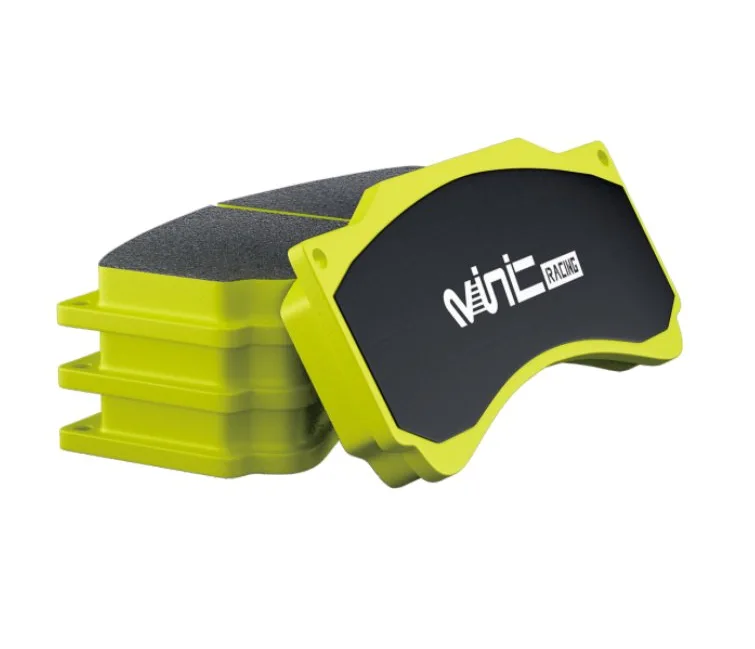
Why Sport Compound
Fade resistance to 850 °C. Where street compounds give up, Sport keeps its friction window — consistent pedal, lap after lap.
High initial bite. μ up to 0.50 means the car answers the moment you brush the pedal. Threshold braking becomes instinct, not effort.
Predictable modulation. A linear torque curve lets you trail-brake deep into corners without locking or glazing.
Track bred, daily drivable. Drive to the track, run your sessions, drive home. One set does both — though daily drivers should read the trade-offs below.
Sport Compound Specs
| Spec | Value |
|---|---|
| Friction coefficient (μ) | 0.42–0.50 |
| Operating temperature | 0–850 °C |
| Character | High bite, track-focused |
| Best for | Track days, time attack, aggressive street |
Honest Trade-Offs
Track compounds work harder and complain louder. Expect more dust than the Street compound and occasional noise when cold — that is the tax on real heat capacity. If the car never sees a track, Street is the smarter pad. If it does, Sport is not optional.
Complete the System
Hot pads need support. Pair Sport with VINIC high-carbon slotted rotors and QC/T970 braided lines, and bed everything in properly before your first session. For the full upgrade, our forged big brake kits add the thermal mass and clamping force heavy track cars need.
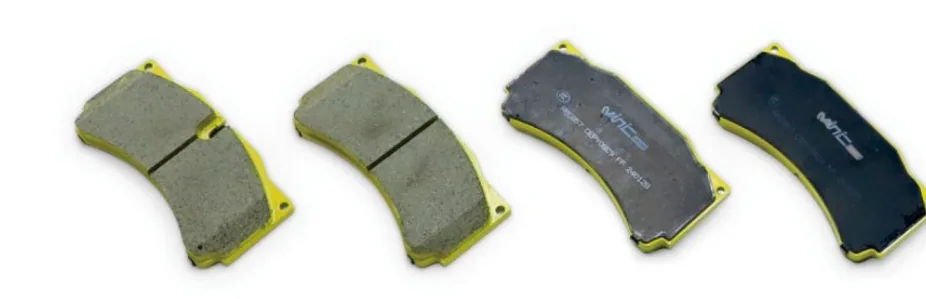
Get a Quote Built Around Your Car
Tell us your year, make and model — we confirm fitment first, then quote. No guesswork, no wrong parts.