

By Nana, Sales Operations Manager at VINIC Brakes · Last Updated: 2026-08-03
Yes — braided stainless brake lines are worth it on most cars: they remove hose swell for a firmer, more consistent pedal and outlast factory rubber. Every VINIC line set is vehicle-specific and carries a 12-month warranty.
Here is the longer version. A factory brake hose is rubber, and rubber expands slightly under line pressure — a small give that softens pedal feel and grows as the hose ages. A braided line wraps a PTFE (polytetrafluoroethylene) core in a stainless steel braid that cannot stretch, so the pressure you apply at the pedal reaches the caliper immediately and identically every time. The upgrade pays off most on cars a few years old, for drivers who care about pedal consistency, and as prep before a track day. One thing it will not do is shorten your stopping distance — that job belongs to tires, pads and rotors. The sections below break down what changes, what does not, and which cars benefit most.
What Do Braided Brake Lines Actually Do?
Brake lines carry hydraulic pressure from the master cylinder to each caliper. Everything about how the pedal feels — and how faithfully the calipers respond — depends on how that pressure survives the trip.
Rubber vs Braided: What’s Inside Each Hose
A factory hose is extruded rubber with fabric reinforcement. It flexes with suspension movement, which is necessary — but its wall also expands a little under pressure, and rubber hardens, cracks and softens with age and heat cycling. A braided stainless line replaces that wall with a PTFE core surrounded by woven stainless steel: the core carries fluid, the braid carries the pressure load and refuses to expand.
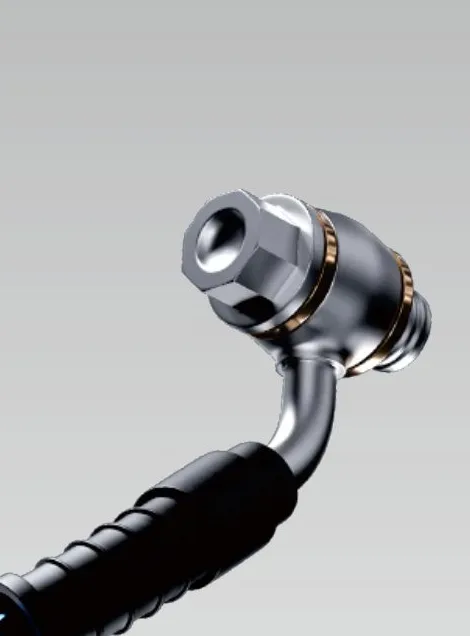
The Pedal Feel Difference
With hose swell gone, pedal travel shortens slightly and the bite point becomes more defined. Drivers usually describe the change as a firmer, more solid pedal — and, more usefully, a pedal that feels the same on the tenth hard stop as on the first. In fitment consultations, the customers who notice the biggest difference are the ones whose cars are four or five years old, because their factory rubber has already started to soften.
Do Braided Brake Lines Improve Braking?
They improve brake response, not brake power — and the distinction matters. Pressure arrives at the caliper faster and more consistently, which sharpens modulation and makes threshold braking easier to repeat. What braided lines cannot do is create grip or dissipate heat: stopping distance is set by tires, pad compound and rotor capacity, and fade is managed by pads, fluid and cooling. If you are preparing for track days, lines are one line item in a bigger checklist — our track day brake guide covers the pads, fluid and heat management that do the heavy lifting.
Are Braided Brake Lines Worth It for Daily Driving?
For most drivers, yes — especially once the factory hoses are a few years old. The pedal firms up and stays that way, the braid protects the fluid core from road debris and abrasion far better than bare rubber, and the set is fit-and-forget: no noise, no harshness, no maintenance ritual. It is one of the more cost-effective brake upgrades precisely because it is felt every single time you drive, not just at the limit. If your hoses are due for replacement anyway, stepping up to braided typically costs less than many owners expect, and you only do the job once.
How Long Do Braided Brake Lines Last?
Braided stainless lines generally outlast factory rubber hoses by a wide margin — the PTFE core does not age the way rubber does, and the braid shrugs off abrasion that would cut a rubber wall. They are not lifetime parts, though: inspect the outer coating and fittings at regular service intervals, and replace any line that shows chafing, kinks or corrosion at the crimps. VINIC line sets carry a 12-month warranty, the same coverage we give our rotors — calipers carry 24 months, and brake pads, as wear items, 6 months against manufacturing defects.
Which Cars Benefit Most?
Judged neutrally, the value of braided lines comes down to three variables: the age of your factory rubber, how sensitive you are to pedal consistency, and how hard you use the brakes. Mapped to real scenarios:
| Scenario | Why braided pays off | What to pair it with |
|---|---|---|
| Daily driver 4+ years old | Factory rubber is already softening; the biggest felt improvement | Fresh DOT 4 fluid, full bleed |
| Spirited street / canyon driving | Consistent bite point over repeated hard braking | Sport-leaning pad compound |
| Track day preparation | Pedal stays consistent session after session | DOT 5.1 high-temp fluid, track pads, proper bedding |
| Heavy SUV / towing | Firm pedal under high line pressures from heavy loads | High-carbon rotors; consider a big brake kit (BBK) |
This is also where we put our own cards on the table. Every VINIC brake line set is built vehicle-specific — correct lengths, end fittings and mounting clips for your exact chassis, never a universal kit trimmed to “close enough” — and the same sets come standard in every VINIC big brake kit. Stock-caliper applications are listed on our rotors and lines page; if your model is not listed, ask and we will confirm whether we can build it.
What to Know Before Installing
Braided lines are only as good as their routing. Two areas decide whether the upgrade serves you for years or causes trouble in a month.
Routing and Clips
The line must follow the factory path with every mounting clip reinstalled, so it cannot rub on the tire, strut or control arm. Before final torque, turn the steering lock to lock and cycle the suspension to full droop — a line that sits fine at ride height can be stretched or pinched at the extremes. Vehicle-specific sets make this easy, because the lengths and brackets are already right.
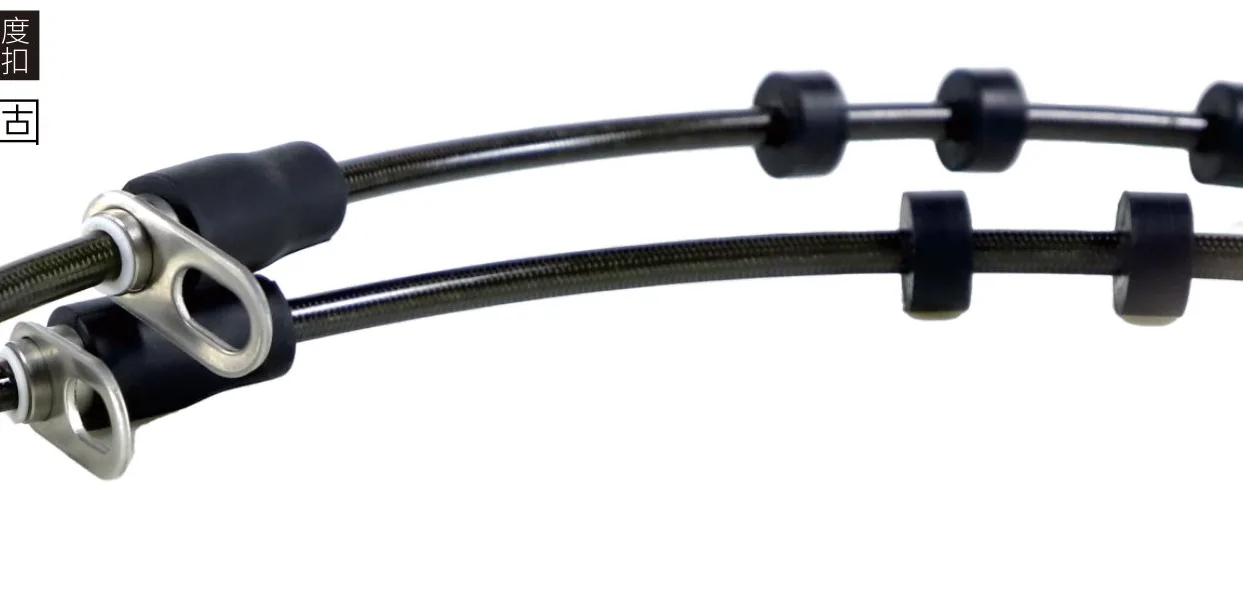
Fluid and Bleeding
New lines are the perfect excuse for a fluid flush: DOT 4 for street use, a high-temperature DOT 4 or DOT 5.1 for track cars, then a thorough bleed at every corner. Air in the system undoes everything the braid gives you — a spongy pedal after install almost always means bleeding, not the lines. Once bled, bed the pads so the friction layer is even; the procedure is in our brake pad bedding guide.
FAQ
Are braided brake lines worth it on a daily driver?
Yes. You feel the firmer, more consistent pedal on every drive, and the braid protects the line from road wear better than rubber. For a car more than a few years old, it is one of the best value brake upgrades available.
Do braided brake lines make a noticeable difference?
On cars with fresh factory rubber, the difference is subtle. On cars four or five years old — where the rubber has softened — most drivers notice a firmer pedal and a more defined bite point immediately after the swap and bleed.
How long do braided brake lines last?
Generally far longer than rubber hoses, because the PTFE core resists aging and the braid resists abrasion. Inspect the coating and fittings at normal service intervals and replace any line showing chafing, kinks or fitting corrosion.
Are stainless steel brake lines better than rubber?
For pedal consistency and durability, yes — the braid eliminates pressure swell and protects the core. Rubber remains fine for low-cost replacement on a car you will not keep long. For an enthusiast car, braided is typically the better one-time choice.
Can I install braided brake lines myself?
If you are comfortable bleeding brakes, yes — the critical steps are factory-correct routing, clip fitment, clearance checks at full lock and droop, and a complete bleed. Otherwise a shop can typically fit a full set quickly.
Will braided lines pass inspection?
Quality vehicle-specific lines that follow factory routing pass visual inspection in most markets. Rules vary by region, so confirm your local requirements — our fitment confirmation is free if you want us to check the exact set for your car first.
As of August 2026, our recommendation is straightforward: if the car is an enthusiast build, an aging daily, or track-bound, braided stainless lines earn their place — and they are the one brake upgrade you will feel on every single drive.
Not Sure Which Lines Fit Your Car?
Send us your year, make and model — we confirm the exact vehicle-specific set for your chassis before you order. Free, within one business day.