

By Nana, Sales Operations Manager at VINIC Brakes · Last Updated: 2026-08-03
Slotted rotors suit most street and track cars — they clear pad debris and gas without weakening the disc. Drilled rotors shed heat slightly faster, but the holes can crack under repeated track heat. VINIC offers both faces in 285–420mm high-carbon discs.
The honest answer is that modern pad compounds have narrowed the practical gap. Slots and holes were both invented to vent pad gas — a bigger problem decades ago than today. What actually decides the choice now is heat cycling, structural strength, pad wear, and how the car is really used. This guide compares slotted and drilled rotors across the five factors that matter, shows where each face wins, and maps the decision to four real driving scenarios — daily commuting, spirited street, track days, and towing — with specs from VINIC’s high-carbon rotor range.

What Do Slots and Holes Actually Do on a Rotor?
Both patterns are machining choices on the disc face, and both were born from the same problem: older pad compounds released gas and debris under heat, and that layer between pad and rotor weakened the bite. Modern compounds release far less gas, so the original venting job matters less today. What the two patterns still change — in different ways — is cooling, strength, pad wear, and wet-weather behavior.
What Slotted Rotors Do
Slots are shallow channels cut across the disc face. As the rotor turns, each slot sweeps under the pad and wipes its surface — clearing dust and glazing, and refreshing the friction layer on every pass. The pad keeps a consistent bite over its life, and water gets an escape path in the rain. The disc keeps nearly all of its original strength, because the slots do not go through the iron.
What Drilled Rotors Do
Drilled rotors carry holes that pass through the disc. The holes give gas, water, and debris a direct exit, add surface edges that sharpen the initial bite, and increase airflow through the disc for modestly better cooling at sustained speed. The trade-off is structural: every hole removes material and creates a point where stress concentrates — which is why the crack question follows drilled rotors everywhere.
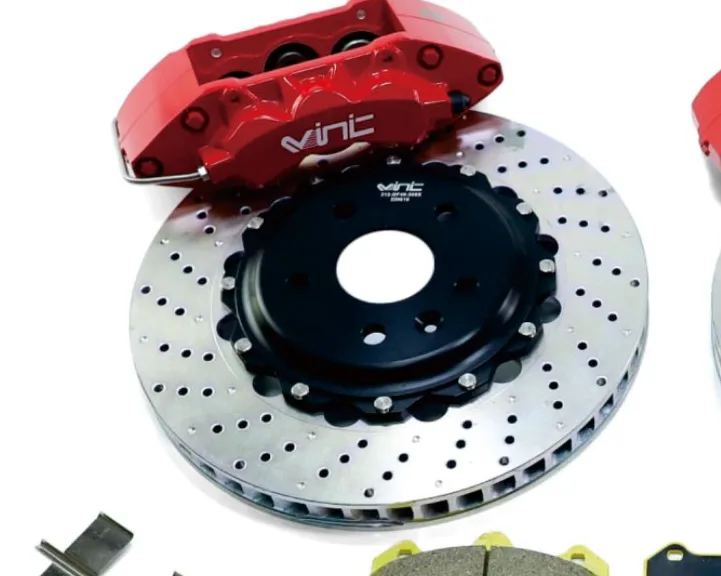
Slotted vs Drilled: 5 Factors That Actually Matter
Forget the marketing claims for a moment. Judged on real use, the decision comes down to five variables — and the two patterns score differently on each.
Heat Management and Fade Resistance
Both patterns manage heat better than a plain blank disc. Drilled rotors shed heat a little faster at sustained speed because the holes move more air through the iron. Slotted rotors run nearly as cool while keeping more material in the disc — and in hard use, total heat capacity and durability matter more than peak cooling. On the street, the difference between the two is small.
Structural Strength and Crack Risk
This is the real dividing line. A slotted disc retains close to blank-level strength. A drilled disc carries stress points at every hole, and under repeated severe heat cycles — the kind a track day produces — cracks can start at the hole edges. Street driving rarely generates that heat, which is why drilled rotors live long lives on road cars but are a gamble for regular track use.
Pad Wear and Bite Consistency
Both patterns wear pads somewhat faster than a blank disc — the edges shave a little material with every pass, and the difference between slotted and drilled here is small. Where slotted pulls ahead is consistency: by wiping the pad face clean on every rotation, the slots keep the bite feeling the same from the first week to the last.
Wet Weather and Daily Driving Behavior
Both patterns clear the water film that forms on wet roads, restoring bite quickly after driving through standing water. Drilled rotors evacuate water fastest of all, though in ordinary rain the difference is hard to feel. For a daily driver, either face behaves well — the choice here is more about budget and preference than performance.
Cost, Looks, and Maintenance
Drilled rotors typically cost more to machine and inspect, and many owners choose them for how they look behind open-spoke wheels — a legitimate reason when the car is mostly a road car. Slotted rotors tend to cost less and, under hard use, typically last longer before needing replacement.
Side-by-Side: Slotted vs Drilled at a Glance
| Factor | Slotted | Drilled |
|---|---|---|
| Heat management | Strong; keeps more iron in the disc | Slightly faster cooling at speed |
| Crack resistance | Near blank-level strength | Holes can crack under repeated track heat |
| Pad wear | Moderate increase vs blank | Moderate increase vs blank |
| Bite consistency | Refreshes pad face every pass | Sharp initial edge bite |
| Wet weather | Very good water clearing | Fastest water evacuation |
| Looks | Subtle, functional | Showy behind open wheels |
| Best for | Street + track workhorse | Street, show, occasional spirited use |
Which Face Should You Choose?
Daily Driving and Commuting
For pure commuting, either face — or a quality blank — will do the job. Choose drilled if the look matters and the budget allows; choose slotted if you want the extra bite consistency without the premium. Pair with a low-dust street compound like VINIC Street pads (μ 0.40–0.46, 0–650°C), and the car stops quietly and predictably for years.
Spirited Street and Canyon Driving
This is slotted territory. Repeated hard braking from higher speeds is exactly what the wipe-and-refresh action is built for, and the stronger disc shrugs off the heat cycles. A slotted high-carbon disc with a sport-leaning compound covers fast road use with margin to spare.
Track Days and Repeated Hard Stops
For regular track use, choose slotted. The peak-cooling advantage of drilled rotors does not compensate for the crack risk that repeated severe heat cycles create at the holes. Pair slotted rotors with a track-rated compound — VINIC Sport pads hold μ 0.42–0.50 from 0 to 850°C — and read our track day brake guide for the fluid and cooling prep that matters just as much.
Towing and Heavy SUVs
With a loaded truck or a heavy SUV, total heat capacity outweighs face pattern. A larger, high-carbon disc does the heavy lifting; a slotted face adds bite consistency on long descents. See our towing and off-road brake page for how we spec these vehicles.
Bedding New Rotors the Right Way
New rotors and pads must be bedded together. The process lays an even transfer layer of pad material onto the fresh disc face, and that layer — not the slot or hole pattern — is what makes the bite consistent and quiet. Skip it, and even the best rotor will judder or squeal. The full procedure is in our brake pad bedding guide.
FAQ
Do drilled rotors really crack?
They can — under repeated severe heat cycles, cracks may start at the hole edges because each hole concentrates stress. Street driving rarely produces that kind of heat, so drilled rotors generally live long, uneventful lives on road cars. The risk is specific to frequent, hard track use.
Are slotted or drilled rotors better for track days?
Slotted. On track, the disc cycles through extreme heat again and again, and structural strength under those cycles matters more than the slightly faster cooling of a drilled face. Slotted rotors keep nearly blank-level strength while still clearing the pad surface every pass.
Do slotted or drilled rotors wear brake pads faster?
Both wear pads somewhat faster than a blank disc — the edges of the slots and holes shave a small amount of pad material with every pass. Between the two patterns, the difference in pad wear is small and should not drive the decision.
Can I run slotted or drilled rotors with stock calipers and pads?
Yes, as long as the disc matches your car’s size and mounting. Face pattern and caliper hardware are independent choices, and either pattern works with factory or aftermarket pads. Confirm the exact fitment for your vehicle before ordering — our fitment confirmation is free.
Do slotted or drilled rotors reduce brake dust or noise?
No meaningful reduction — dust and noise come mainly from the pad compound, not the disc face. Slots do keep the pad surface cleaner, which helps bite consistency, but if dust is the complaint, the fix is a low-dust pad, not a different rotor pattern.
Are slotted or drilled rotors worth it for a daily driver?
For looks and wet-weather confidence, yes — either face is a reasonable upgrade. For pure economy, a quality high-carbon disc with a plain face stops a daily driver just as well. Spend the difference on better pads first; the pad compound shapes everyday braking far more than the rotor pattern.
The Bottom Line
As of August 2026, our recommendation is simple: choose slotted for any car that sees hard or repeated braking — it is the durable workhorse. Choose drilled when the car is street-driven and the look behind the wheels matters. Either way, VINIC supplies both faces in high-carbon discs from 285 to 420mm, vehicle-matched to your exact model. Browse the range on our rotors page.
Not Sure Which Face Fits Your Car?
Tell us your model year, wheel specs, and how you drive — we will confirm the right rotor size, face pattern, and pad compound for your exact car. Free, within one business day.