

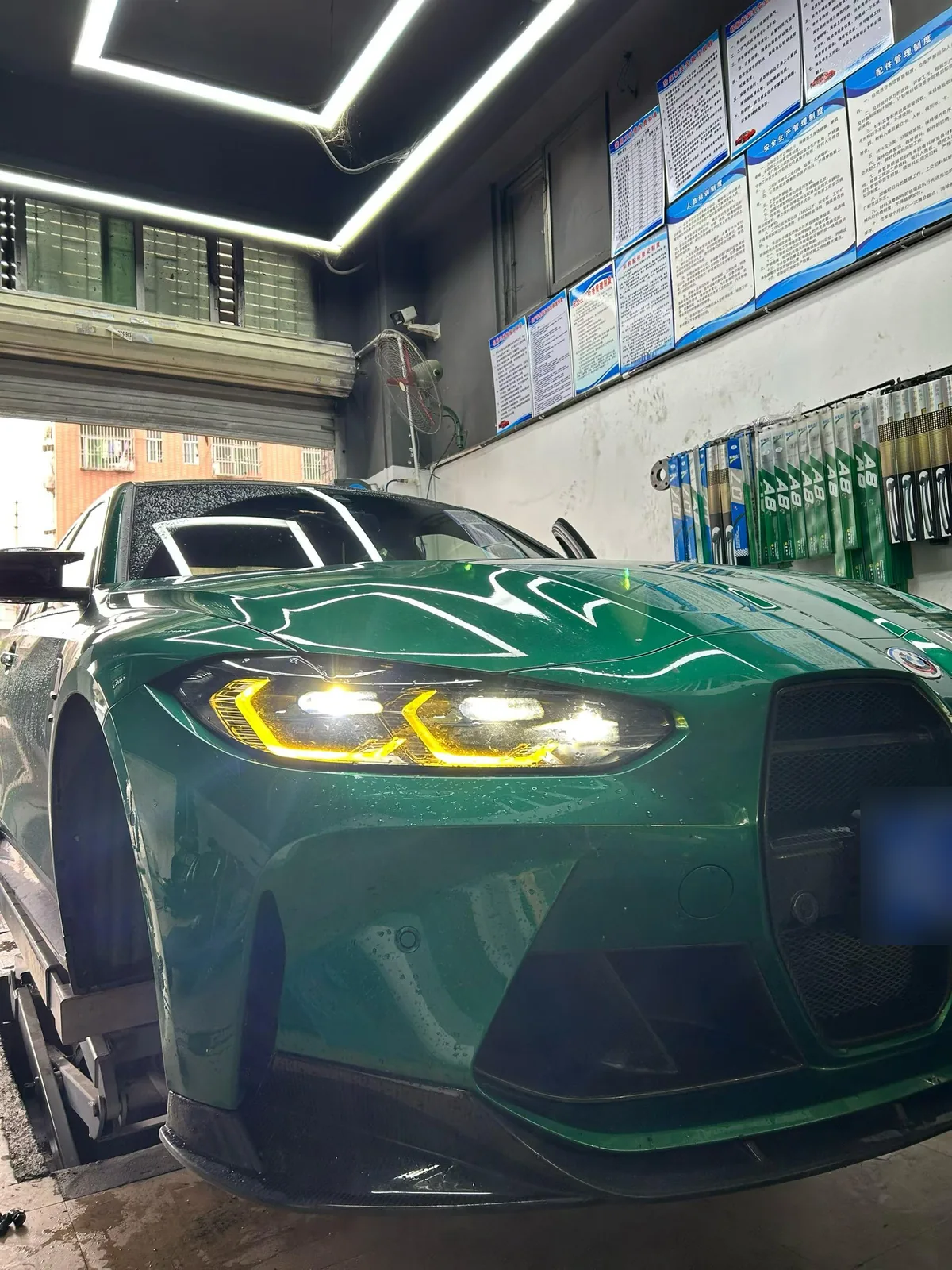
The steering wheel starts shimmying somewhere above 60 mph every time you touch the brake pedal. There is a groan underneath it — a low, cyclical drone that matches the shake. That is high-speed brake judder, and it does not get better on its own. Recently an M3 Competition came into our shop with exactly this complaint: judder at highway speeds, accompanied by brake noise, on the factory braking system. The owner had lived with it long enough — and traveled a long way to have it solved in one visit. This guide explains what causes judder like this, how it gets diagnosed, and what the actual fix looked like on that car.
What High-Speed Brake Judder Actually Is
Judder is vibration you can feel — through the steering wheel, the brake pedal, sometimes the whole seat — that appears specifically under braking and usually within a speed band. It is different from a squeal (a sound) or a soft pedal (a hydraulic problem). Judder means something in the friction pair is no longer uniform: as the pads clamp the rotor, the clamping force rises and falls with each revolution, and that pulsing force is what you feel. Anything that makes the rotor surface uneven — in thickness, in hardness, or in deposited friction material — will do it.
The Usual Causes
Disc thickness variation (DTV). The rotor is not the same thickness all the way around. Even a few hundredths of a millimeter of variation makes the pads grab harder on the thick spots once per revolution — that is the classic pedal-pulsing judder. DTV develops from uneven wear, corrosion between pad contacts when a car sits, or prolonged light dragging of a sticky caliper.
Hot spots and hardened patches. Repeated severe heating can create localized hard spots in the rotor iron. These patches have different friction and wear characteristics from the surrounding material, so the rotor wears unevenly and judder follows. You can often see them as bluish or darker patches on the disc face.
Uneven pad transfer layer. Pads work by depositing a thin, even film of friction material onto the rotor. If that film goes on unevenly — a skipped or botched bed-in, holding the pedal hard at a dead stop with hot brakes, or a cheap compound that smears — the rotor becomes unevenly grippy and judders under braking. This is the cause most often misread as a “warped” rotor.
Runout. If the hub face or the rotor hat is dirty, corroded or damaged, the rotor sits crooked and wobbles as it turns. Lateral runout does not always judder immediately — it wears the rotor into DTV over thousands of miles, and the judder arrives later. This is why runout gets measured during diagnosis, not just the rotor surface.
Mechanical play and caliper condition. Worn wheel bearings, tired control-arm bushings or loose suspension joints let the whole knuckle move under braking load and amplify any rotor unevenness. On the caliper side, seized slide pins, sticking pistons or uneven pad retraction make one pad drag, overheating one rotor face and starting the whole cycle.
Judder Diagnosis Cheat Sheet
| What You Feel | Most Likely Cause | What to Check |
|---|---|---|
| Pedal pulses once per wheel revolution | Disc thickness variation | Micrometer at multiple points around the rotor |
| Shake started after repeated hard stops | Hot spots / uneven transfer layer | Rotor face for blue or dark patches |
| Judder appeared months after a rotor or hub job | Runout from dirty or corroded mounting face | Dial indicator on the rotor edge, hub face cleaned |
| Judder plus a constant pull or one hot wheel | Sticking caliper slide or piston | Caliper service: pins, seals, piston movement |
| Shake even without braking, worse under load | Wheel bearing or suspension play | Bearing play, bushings, joint torque |
A Real Case: This M3 Competition
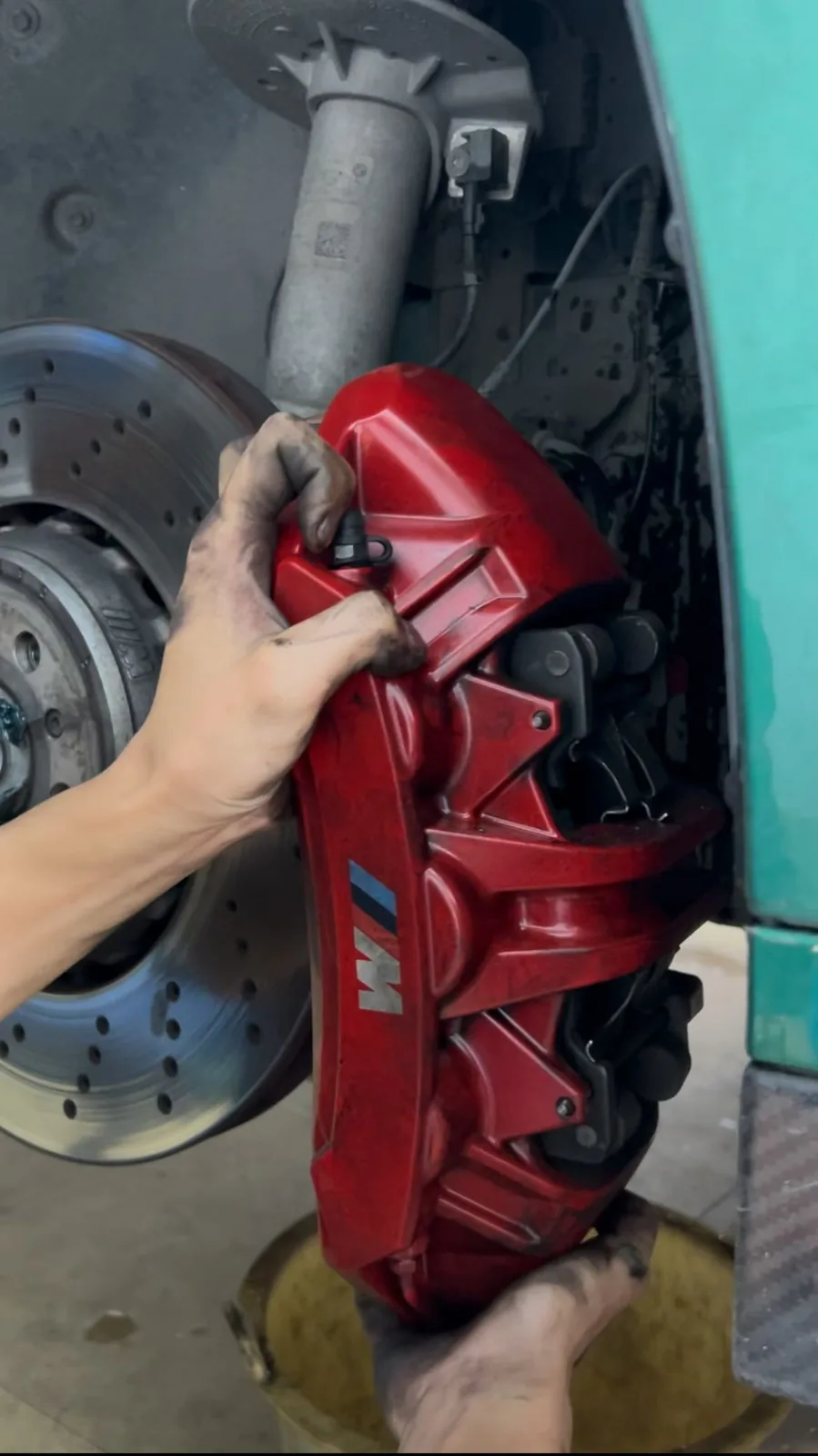
The car in these photos arrived with high-speed judder and brake noise on the factory system. The answer, after inspection, was a full front-end refresh done in a single visit: new drilled rotors and new pads, plus a deep service of the factory M calipers — stripped, cleaned and rebuilt so every piston and slide moved freely again. Fresh hardware on both sides of the friction pair, then a proper bed-in procedure to lay down an even transfer layer from day one. Judder gone, noise gone, pedal feel back to what an M car should deliver.
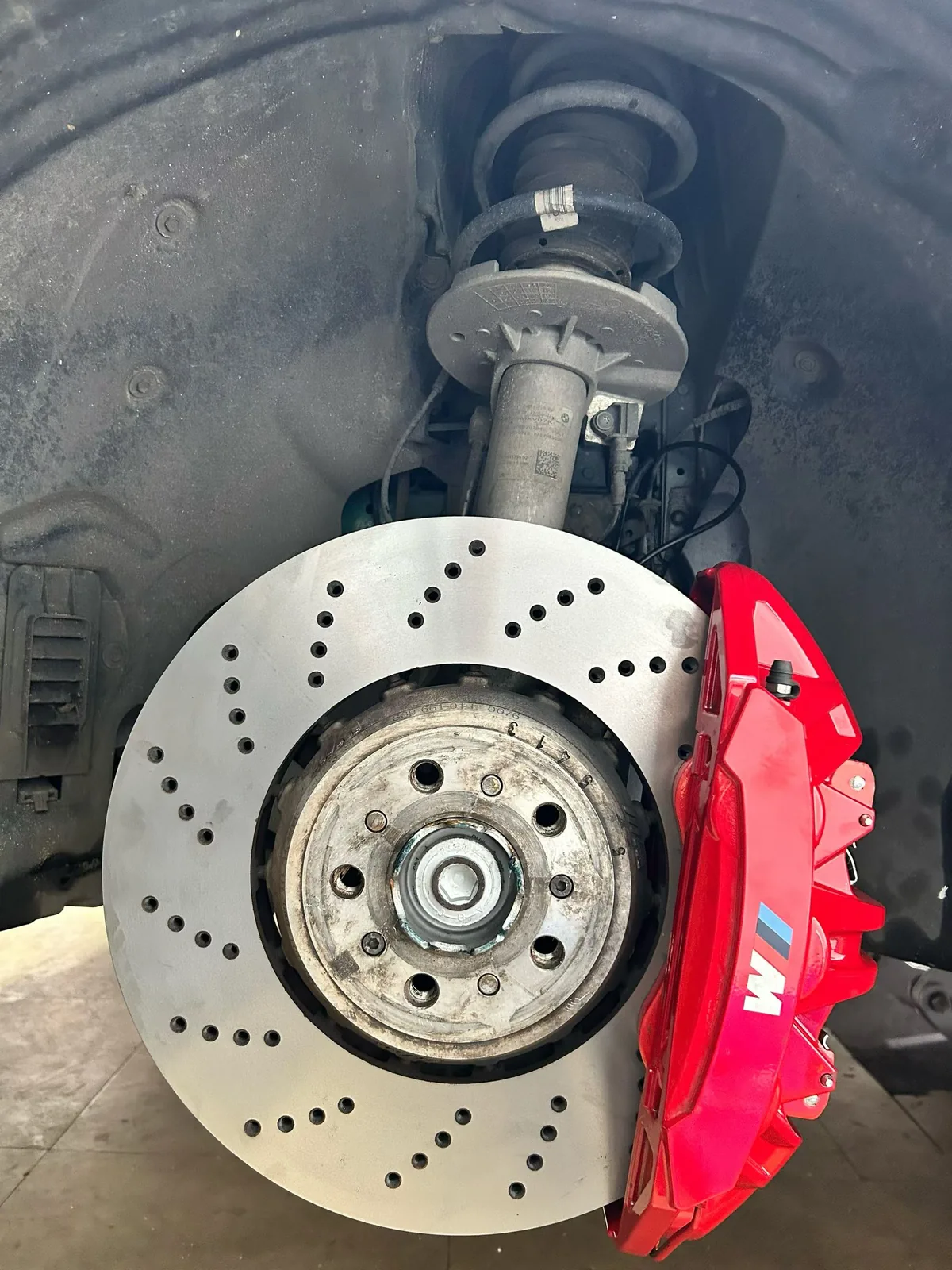
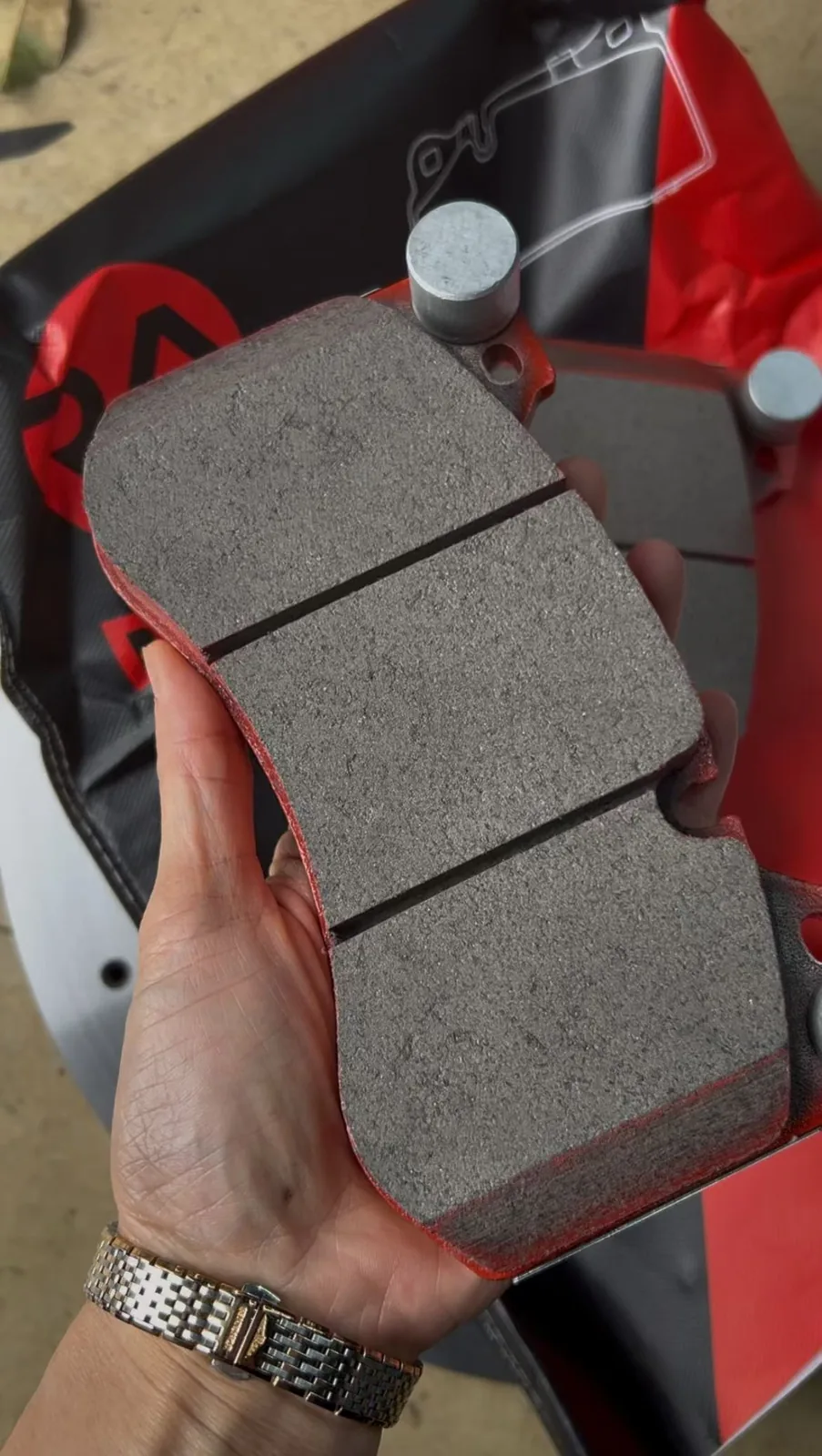
The caliper deep service matters more than most owners realize. A performance caliper with sticky pistons will ruin a brand-new set of rotors in months — replacing discs without servicing the calipers is how judder comes back for a second visit.
Why You Should Not Keep Driving On It
Judder is not a comfort issue — it is a safety issue. A rotor with uneven thickness cannot deliver even clamping force, which means braking performance varies with every wheel revolution, precisely when you need it most: at highway speed. The vibration also hammers everything around it — pads wear unevenly, wheel bearings and suspension joints take cyclic loads they were not designed for, and the steering wheel shake distracts at exactly the wrong moment. And the underlying cause never improves on its own: a transfer-layer problem keeps smearing, DTV keeps wearing, a sticky caliper keeps dragging. Every week of delay converts a parts-and-labor fix into a bigger one.
When to Hand It to a Professional
Bring the car in when you feel pulsing through the pedal or wheel under braking, when braking is accompanied by grinding or a cyclical drone, when the car pulls to one side, or when one wheel runs noticeably hotter or dustier than the others. A proper diagnosis measures rotor thickness variation and runout with gauges, inspects the transfer layer and hot spots, and checks caliper movement — guessing at parts without those measurements is how money gets wasted. If you are near our shop, or your local installer needs support, talk to us — and you can see this M3’s full photo set in our install gallery.
FAQ
Is brake judder dangerous?
Yes — treat it as a safety fault, not an annoyance. Judder means braking force is uneven, and the vibration accelerates wear on pads, rotors, bearings and suspension. It will not fix itself; it will get more expensive.
Will new pads alone fix brake judder?
Almost never. If the rotor has thickness variation, hot spots or an uneven transfer layer, new pads simply inherit the uneven surface. The durable fix addresses both sides of the friction pair — rotor and pads — plus whatever caused the problem, usually caliper condition or runout.
Can a sticking caliper cause high-speed judder?
Absolutely. A seized slide pin or sticky piston keeps one pad dragging, which overheats one face of the rotor and creates hot spots and thickness variation. That is why a serious judder repair includes a caliper inspection or service, not just new parts.
Brake Judder? Don’t Wait on It.
Tell us the symptoms — when it shakes, at what speed, since when — and we will tell you what to check first. One visit, fixed properly.