

Brake pad replacement is one of the most common line items in car ownership — and one of the least transparent. Quotes for the same job on the same car can differ by a factor of three depending on where you go, what parts they use, and whether rotors get added to the ticket. This guide breaks down where the money actually goes, what the job costs for popular platforms like BMW, and the point where spending a little more on an upgrade beats paying for another like-for-like swap.
The Short Answer
A straightforward brake pad replacement typically runs $100–$300 per axle at an independent shop (parts plus labor), $150–$500+ per axle at a dealership, or $40–$120 in parts if you do it yourself. Add rotors and the total roughly doubles. Premium vehicles, electronic parking brakes and performance compounds push every one of those numbers up.
Where the Money Goes
Parts: the pads themselves

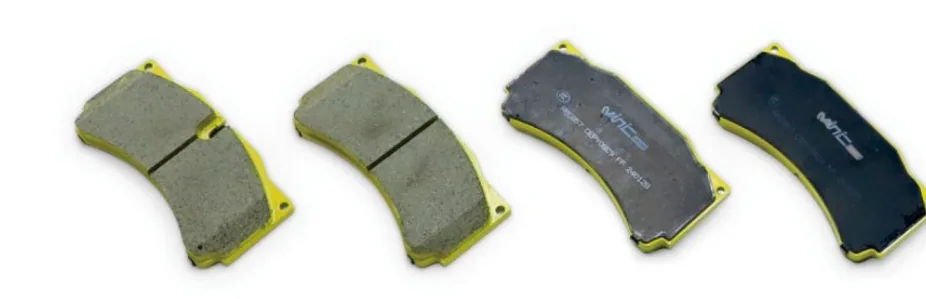
A set of pads for one axle spans a wide range. Economy pads for a common sedan start around $30–$50 per axle; quality street compounds sit in the $60–$120 band; premium and performance compounds run $100–$250+. The spread reflects what is inside: friction chemistry, shim quality, and whether the compound was actually bench-tested for its claimed temperature window or just relabeled. Cheap pads that dust heavily, squeal, or fade on the first mountain drive are expensive pads bought twice.
Labor
Shops typically bill 0.8–1.5 hours per axle for a pad-only swap, so labor lands between $70 and $250 depending on local rates. The job itself is quick — our companion piece on how long a brake pad replacement takes shows why a motivated DIYer can do an axle in under an hour. Dealerships charge more per hour and often bundle “brake service” extras like cleaning and hardware kits.
The add-ons that change the quote
- Rotors: if discs are below minimum thickness, grooved or lipped, they get machined or replaced — adding $50–$150+ per rotor in parts, plus labor.
- Hardware and sensors: clips, shims and electronic wear sensors (common on European cars) add $20–$60.
- Electronic parking brake service mode: rear axles on many modern cars need a scan-tool retract cycle; some shops bill extra time for it.
- Fluid: a brake fluid flush adds $70–$120 — worth doing if it is due, since old fluid boils long before good pads fade.
Typical Cost Summary
| Job | DIY (Parts Only) | Independent Shop | Dealership |
|---|---|---|---|
| Pads, one axle (sedan) | $40–$120 | $100–$300 | $150–$400 |
| Pads + rotors, one axle | $120–$300 | $250–$600 | $400–$800 |
| Pads, one axle (Euro/performance) | $80–$250 | $200–$450 | $300–$600+ |
| Both axles, pads only | $80–$240 | $200–$600 | $300–$800+ |
These are market ranges for standard passenger vehicles, not quotes — labor rates and parts pricing vary widely by region and model.
BMW Brake Pad Replacement Cost
BMW deserves its own section because it is the cost question owners ask most — and because the spread is dramatic. A dealer pad replacement on a 3 Series commonly quotes $300–$500 per axle once pads, the mandatory wear sensor and dealer labor rates are combined; xDrive and M Sport variants sit higher. An independent European specialist usually lands at $200–$350 per axle. DIY with quality pads and a new sensor is often under $150 in parts.
Two BMW-specific notes: the electronic wear sensor must be replaced or the warning light stays on, and BMW’s braking systems reward compound quality — the car’s braking balance is tuned around a firm, high-friction pad, so bargain compounds are felt immediately in pedal travel and fade. If you own a 3 Series and are pricing the job, look at what a proper pad upgrade does for the platform on our BMW 3 Series brake page — at dealer-quote money, better pads are nearly free.
DIY vs Shop: The Honest Math
A pad swap is one of the most approachable DIY jobs: jack, stands, a socket set, a C-clamp or piston tool, and an hour of patience. Doing both axles yourself typically saves $200–$500 in labor. The honest caveats: you need to know how to retract an electronic parking brake if your car has one, you must torque lug and caliper bolts correctly, and you should bed the new pads in properly afterward — our brake pad bedding guide covers the ten-minute procedure most people skip. If any of that makes you uneasy, an independent shop is the value sweet spot.
However you buy the job, protect yourself with two questions before authorizing work: ask for the rotor thickness measurement in writing (not “they looked worn”), and ask which pad line is being fitted. A shop that answers both precisely is a shop you can keep; one that answers neither is quoting blind.
When Upgrading Beats Replacing
Here is the arithmetic most quotes never show you. If you are already paying shop labor to pull wheels and calipers, the marginal cost of fitting better parts is just the parts difference. And if you are wearing pads out every 15,000–20,000 miles — towing, mountain roads, a heavy SUV, or simply a heavy right foot — a like-for-like replacement locks you into paying that labor again and again.
| Your Situation | Replace Like-for-Like | Consider an Upgrade |
|---|---|---|
| Normal wear, happy with braking | ✔ Quality street compound | — |
| Pads fading on descents or towing | — | ✔ Heavy-duty / sport compound |
| Pads wearing out in under 20k mi | — | ✔ Better compound; check calipers |
| Track days planned | — | ✔ Sport compound + fluid + lines |
| Heavy SUV, repeated fade, warped rotors | — | ✔ Big brake kit — more thermal mass, not just more pad |
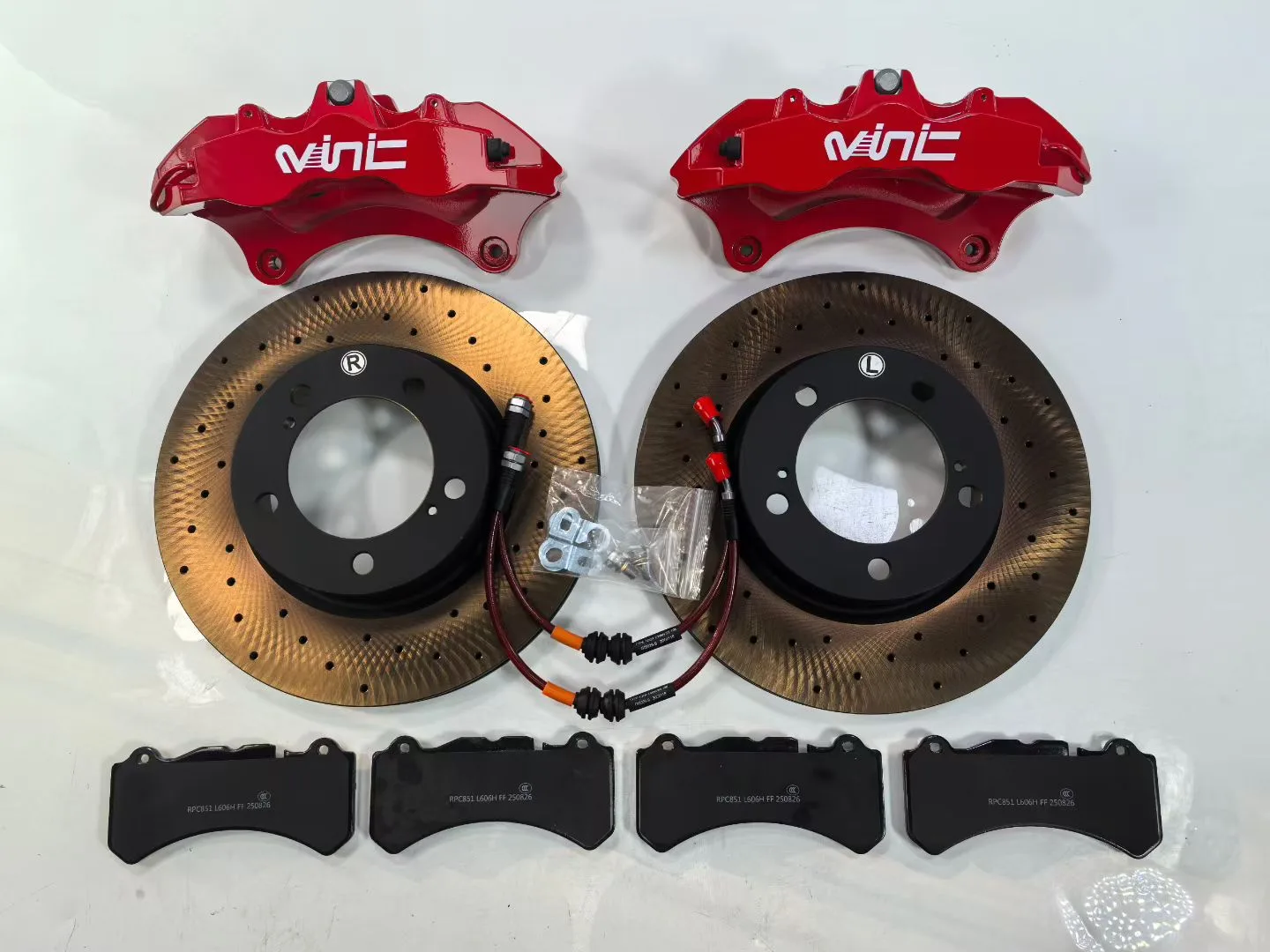
The top rung of that ladder is a full big brake kit: forged multi-piston calipers, larger high-carbon rotors (285–420 mm), performance pads, braided stainless lines and vehicle-specific brackets in one box. Our big brake kits are factory-direct — often less than two dealer pad-and-rotor jobs — and they end the fade-and-replace cycle permanently for heavy or hard-driven vehicles.
FAQ
How much should a brake pad replacement cost?
For a common sedan at an independent shop, $100–$300 per axle for pads only is a fair range. Dealerships run higher; DIY parts cost $40–$120 per axle. Quotes far above these ranges usually include rotors or premium parts — ask for an itemized breakdown.
Should I replace rotors at the same time as pads?
Only if they need it: below minimum thickness (stamped on the rotor), deeply grooved, cracked, or heavily lipped. Smooth, in-spec rotors can accept new pads after a light scuff. Many shops replace rotors by default because it is easier than measuring — ask for the measurement.
Why is the dealership quote so much higher?
Higher hourly rates, OEM-branded parts at list price, and bundled “service” items. The same job with equivalent-quality parts at a good independent shop typically costs 30–50% less.
Is it worth paying more for premium pads?
Yes — the pad is the part that determines how the car actually stops. The price difference between economy and quality compounds is usually $30–$80 per axle, while the difference in dust, noise, fade resistance and rotor wear is felt every day. Labor is identical either way.
Get a Quote Built Around Your Car
Tell us your year, make and model — we confirm fitment first, then quote. No guesswork, no wrong parts.