

Ask five mechanics how long brake pads last and you will get five different numbers — and all of them will be right, for somebody. Pad life is one of the most variable wear items on any car, because it is the direct product of what the pad is made of, what the vehicle weighs, and how the person behind the wheel drives. Here is how to estimate yours honestly, and how to catch wear before it turns into a rotor replacement.
The Short Answer
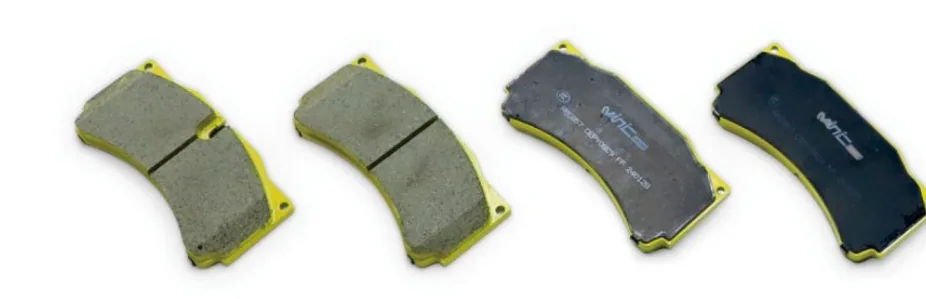
Most street brake pads last between 30,000 and 70,000 miles, with front pads wearing roughly twice as fast as rears. Gentle highway commuters can see 60,000+ miles from a quality street compound; heavy city stop-and-go, towing, mountain driving or track use can cut that to 20,000 miles or less. There is no odometer you can trust — only the pad thickness gauge and the warning signs below.
What Actually Determines Pad Life
1. The friction compound
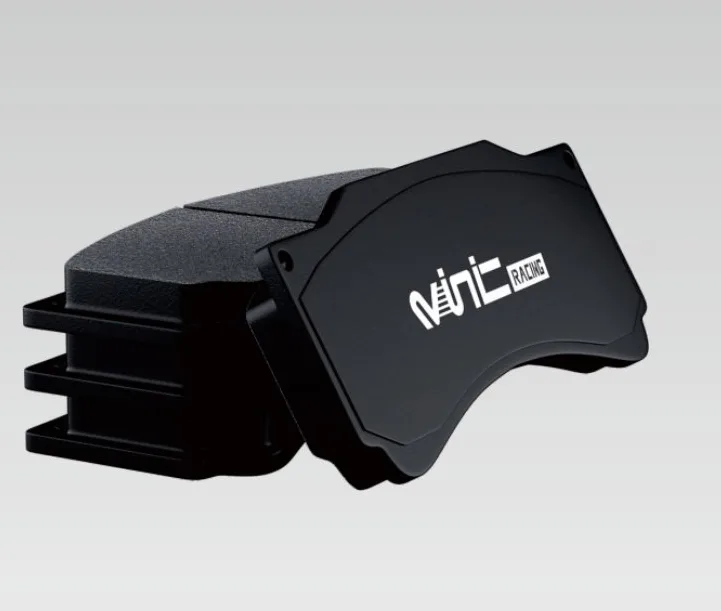
Compound chemistry is the foundation. Softer, high-bite compounds trade lifespan for grip and feel; harder compounds last longer but can give up cold bite and quietness. A well-engineered street compound — ours runs μ 0.40–0.46 from cold to 650°C — balances the two, which is why compound quality matters more than the marketing word on the box. Sport compounds built for 850°C track work wear faster on the street because they spend their life below their designed temperature window.
2. How and where you drive
- City stop-and-go: the hardest life a pad can live. Dozens of heat cycles per trip, constant light braking, no airflow to cool the rotors. Expect the short end of the range.
- Highway commuting: the easiest. Long gaps between braking events mean cool, gentle wear. This is where 60,000–70,000-mile stories come from.
- Mountain and hill country: long descents cook pads continuously. Downshifting to engine-brake on descents can double pad life here.
- Towing and hauling: every extra thousand pounds multiplies the heat each stop must absorb. Loaded trucks and SUVs routinely halve the life of a standard pad — one reason we steer tow rigs toward a heavy-duty compound.
- Track days: measured in hours, not miles. A hard track weekend can consume a set of street pads entirely.
3. Vehicle weight and brake sizing
Physics is simple: kinetic energy grows with mass and the square of speed, and your pads convert all of it to heat. A 5,500 lb SUV asks far more of the same-size pad than a 3,000 lb sedan. Front axles carry 60–70% of braking load, which is why front pads wear roughly twice as fast as rears on the same car.
Typical Lifespan by Scenario
| Driving Scenario | Realistic Pad Life (Front) | Notes |
|---|---|---|
| Highway-dominant commuting | 50,000–70,000 mi | Cool operation, gentle wear |
| Mixed city / suburban | 30,000–50,000 mi | The average driver’s reality |
| Heavy city stop-and-go | 20,000–35,000 mi | Constant heat cycles |
| Towing / heavy SUV | 15,000–30,000 mi | Upgrade compound strongly advised |
| Mountain driving | 15,000–30,000 mi | Engine-brake on descents to extend |
| Track use (sport compound) | 1–5 track days | Check after every event |
Warning Signs Your Pads Are Done
- Squeal at light braking: most pads carry a metal wear indicator that contacts the rotor at roughly 3 mm of remaining material. A high, steady squeal that appears under gentle braking is the designed alarm — not a defect. (Other squeak causes are covered in our guide to brakes squeaking after new pads.)
- Visible thickness under 3 mm: look through the wheel spokes at the pad’s friction material. New pads start around 10–12 mm; at 3 mm, schedule the replacement. At 2 mm, you are on borrowed time.
- Grinding: the backing plate is touching the rotor. Stop driving — every mile is now machining the disc.
- Longer stopping distances or a softer pedal: worn pads run hotter and fade sooner.
- Dashboard warning light: many European cars use electronic wear sensors; the light means one axle’s pads are at the limit.
- Pulling or vibration under braking: often uneven pad wear or transfer-layer issues rather than pure thickness — still a reason to inspect.
How to Check Brake Pad Thickness
One more habit pays for itself: build a pad check into every tire rotation. Rotation already puts the wheels off the car, so the measurement costs nothing, and logging the number twice a year turns pad wear from a surprise into a forecast — you will know your personal wear rate per 10,000 miles instead of trusting a generic range.
On many wheels you can see the outer pad through the spokes with a flashlight — the friction material sits between the rotor and the metal backing plate. For a real measurement, remove the wheel and measure the inner pad too; it often wears faster. The rule of thumb the industry uses: replace at 3 mm, plan at 4 mm. Measure all four pads on an axle before judging, and always check both sides of the car.
Matching the Compound to Your Mileage
If your pads consistently die early, the answer is usually not “buy harder pads” — it is “buy the right pads for the job.” Daily commuters get the best life-per-dollar from a low-dust street compound designed for the 0–650°C window; see our brake pad range for how the compounds split. Tow rigs and heavy SUVs belong on a heavy-duty semi-metallic formulation. And if you are wearing pads out in under 20,000 miles on a heavy vehicle with stock-size brakes, the honest fix is more thermal mass — bigger rotors and multi-piston calipers — not a harder pad. Our daily commute page maps compounds to use cases if you are unsure where you land.
How to Make Any Pad Last Longer
- Look further ahead and brake once, firmly, instead of dragging the pedal for the last half-mile.
- Engine-brake on long descents — let the gearbox hold speed so the brakes stay cool.
- Do not rest your foot on the pedal in traffic; even light constant contact keeps pads hot.
- Keep caliper slide pins lubricated at every service — a dragging caliper eats one pad in months.
- Bed new pads in properly; uneven transfer layers chew pads unevenly.
When the time does come, the money question is next — our breakdown of brake pad replacement cost covers parts, labor and when upgrading beats replacing.
FAQ
How many miles do brake pads last on average?
For a typical passenger car in mixed driving, 30,000–50,000 miles on the front axle and up to double that on the rear. Highway commuters often exceed 60,000; heavy city or towing use can fall below 25,000.
At what thickness should brake pads be replaced?
Replace at 3 mm of remaining friction material. New pads are typically 10–12 mm. Below 2 mm you risk backing-plate contact with the rotor, which destroys the disc.
Do front or rear brake pads wear faster?
Front pads, by roughly two to one. Weight transfer under braking loads the front axle, so front brakes do 60–70% of the work.
Why did my brake pads wear out so fast?
The usual suspects: heavy stop-and-go driving, towing on a standard compound, a sticking caliper or slide pin, riding the brake pedal, or a sport/track compound used for daily driving. A quick inspection of wear patterns — inner vs outer pad, left vs right — usually identifies the cause.
Get a Quote Built Around Your Car
Tell us your year, make and model — we confirm fitment first, then quote. No guesswork, no wrong parts.