

By Nana, Sales Operations Manager at VINIC Brakes · Last Updated: 2026-08-10
Regen handles daily slowing, but your Model 3 still needs friction brakes for emergency stops, holds, and every track session — and light use makes factory discs rust. VINIC’s carbon-ceramic conversion solves both.
Ask a group of Model 3 owners about their brakes and you will hear two opposite stories: “I barely use them” and “they juddered at highway speed.” Both are true, and both come from the same cause — regenerative braking does so much of the daily work that the friction brakes sit idle, and idle brakes develop their own problems. This guide explains what regen actually covers, why EV discs corrode from disuse, the moments when friction brakes carry the whole car, and the conversion we build for Model 3 owners who want brakes that work as well in year five as in week one.
What Regen Actually Does — and What It Can’t
Regenerative braking turns the drive motor into a generator, converting the car’s momentum back into battery charge. For the gentle slowing that makes up most daily driving — traffic, junctions, off-ramps — it is genuinely excellent: smooth, efficient, and nearly wear-free. Tesla tuned it well enough that many owners drive for months with barely a touch of the brake pedal.
But regen has hard limits. It fades as the battery fills, it backs off in cold weather, and it cannot clamp the car to a stop in a true emergency — that is always the friction brakes’ job. Every full-weight panic stop, every hold on a steep hill, every ABS event, and every lap of a track day runs on pads, discs and hydraulic pressure. The system you rarely use is the one that has to work perfectly on the worst day.
The EV Brake Problem: Rust From Disuse
Here is the part that surprises owners: friction brakes are designed to be used. Regular braking keeps the disc surface polished clean; pads and discs expect the exercise. When regen does most of the work, the discs sit for weeks gathering surface rust — especially in humid or coastal climates. The rust builds unevenly, and when you finally need a hard stop, the pads bite on an uneven surface. The result is the classic EV complaint: judder under braking, a grinding first stop after rain, and discs that wear out from corrosion long before they wear out from friction.
We see the mechanical consequences constantly in fitment consultations — and not only on Teslas. The BMW M3 that came to us with high-speed brake judder taught the same lesson: heat, uneven deposits and corrosion show up as pedal feel, and no software update fixes a disc surface. The fix is mechanical: use the brakes deliberately a few times a week, or fit hardware that does not rust.
When Model 3 Friction Brakes Get Worked Hard
Even gentle owners meet these situations. The full-weight emergency stop from highway speed — a Model 3 with passengers is a heavy car, and physics does not care that you drive carefully. Mountain descents, where regen alone cannot hold speed without overheating the battery management limits. Track days, where a stock Model 3’s brakes face sustained heat they were never sized for — if that is your plan, read our track day brake guide before booking. And the everyday one nobody thinks about: the parking hold on a steep driveway, where the friction brake is the only thing holding the car.
In each case the question is the same: when you press the pedal hard, does the car stop straight, consistently and quietly? On corroded factory discs, the honest answer is “less than it should.”
The Carbon-Ceramic Conversion
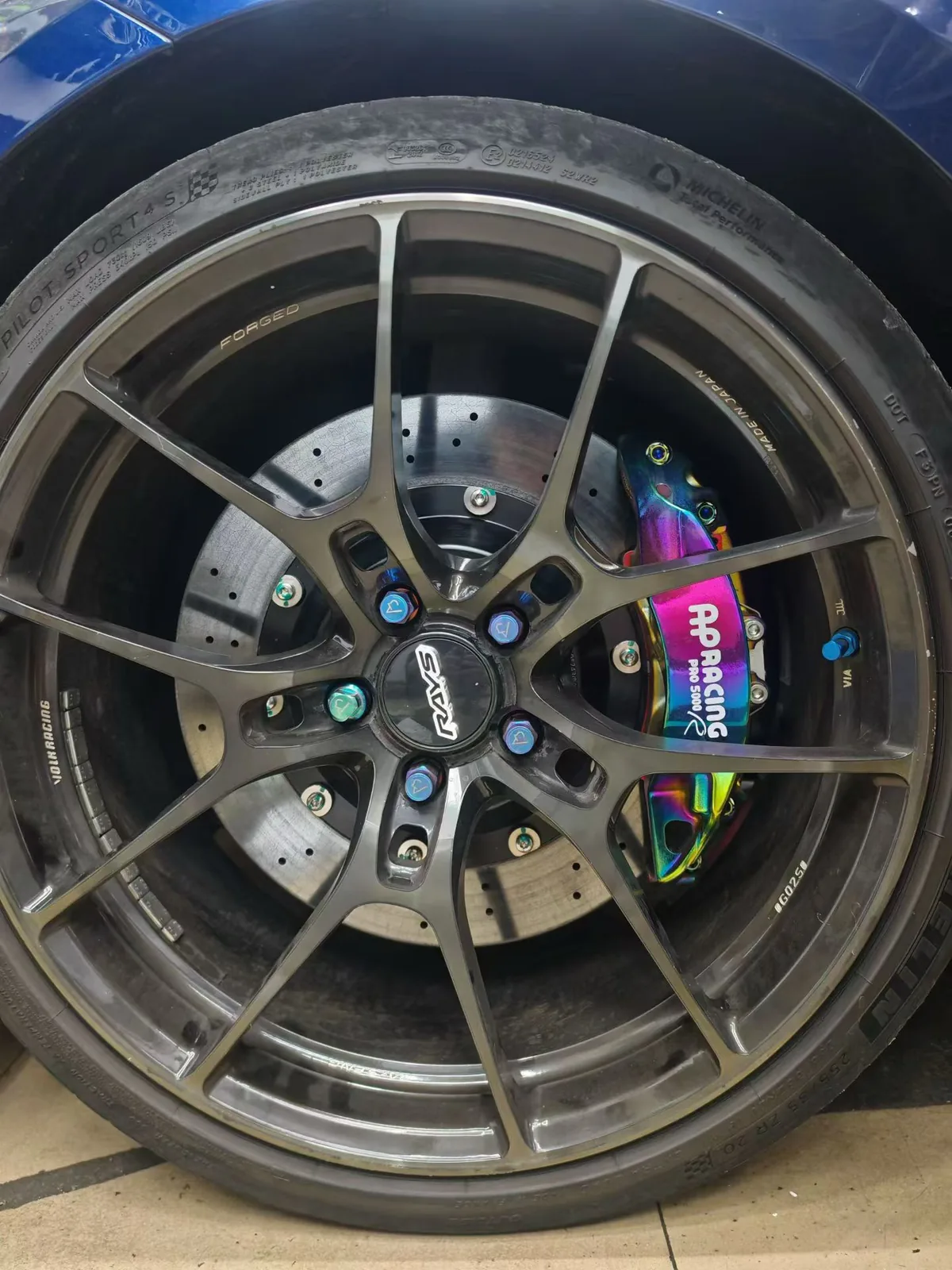
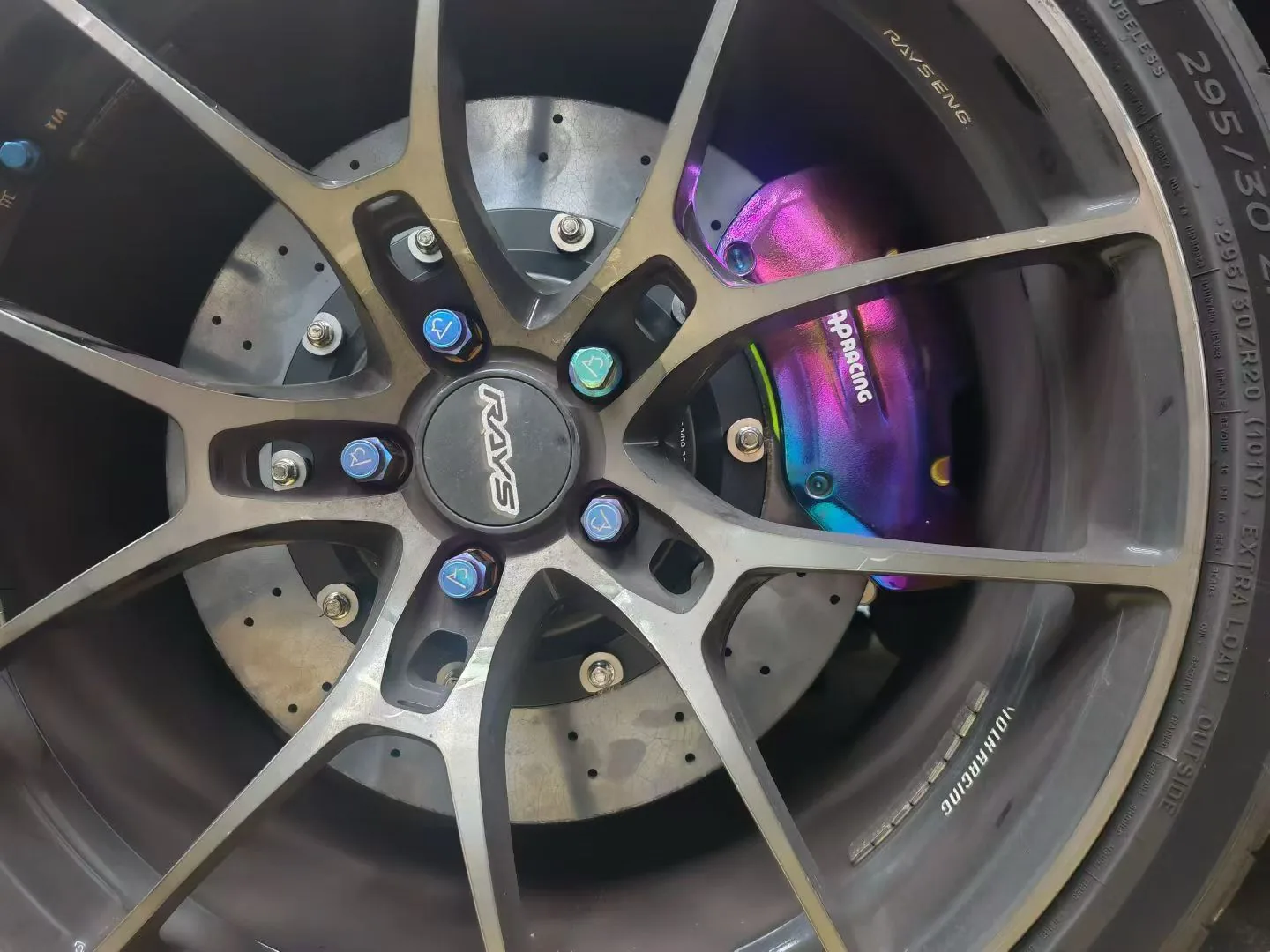
This is where we put our cards on the table. For Model 3 owners — including the Highland — we build carbon-ceramic brake conversions: carbon-ceramic discs that cannot rust, paired with vehicle-specific brackets and hardware, sized per vehicle and confirmed against your exact car before we quote. Carbon-ceramic solves the disuse problem at the root because there is no iron surface to corrode — the disc you need in an emergency is the same disc whether you used it yesterday or last month.
The side benefits are real but worth stating honestly: carbon-ceramic discs are lighter than iron equivalents (less unsprung mass, which an EV’s range-conscious suspension appreciates), they run quietly, and they typically outlast iron discs by a wide margin in this kind of low-duty-cycle use. What they will not do is shorten an emergency stop by themselves — tires and pads decide that. Browse the technology on our Model 3 upgrades page and the rotors page, and see a documented Highland conversion — discs and color-finished calipers, photographed wheel by wheel — in the install gallery.
FAQ
Do Teslas need brake pad replacements?
Yes, eventually — regen dramatically slows pad wear, but pads still age, and their backing plates and hardware still face corrosion. The bigger replacement driver on EVs is the discs: they corrode from disuse long before the pads wear thin.
Why do Tesla brakes rust?
Iron discs rust whenever moisture meets bare metal — and on a strong-regen EV the pads rarely scrub the surface clean. Weeks of light use let surface rust build unevenly, which then shows up as judder or noise under hard braking. It is a disuse problem, not a defect.
Can you track a Model 3 on stock brakes?
You can, but you should not expect the stock friction brakes to enjoy it — they were sized for a car where regen shares the work, and sustained track heat is a different world. Upgrade pads, fluid and cooling first, and read our track day guide before your first session.
Does regen braking wear out brake pads?
Regen itself does not touch the pads at all — it slows the car through the motor. That is exactly why pads last so long on EVs, and why the discs become the weak link instead.
Are carbon-ceramic brakes worth it on a Model 3?
If your driving is gentle and your discs are already showing corrosion judder, they are the permanent fix — no iron to rust, far longer life, and a quieter stop. If you track the car, they are one part of a bigger heat-management package. Either way we confirm sizing against your exact car before quoting.
Will a brake conversion affect regen or warranty?
Regen is entirely electric — motor, inverter and software — and a mechanical brake conversion does not touch it; regen behavior stays exactly as Tesla delivered it. On warranty, any modification conversation belongs with your dealer, but the conversion changes no electronics and no software.
As of August 2026, our recommendation for Model 3 owners is simple: exercise the friction brakes weekly, watch for the first signs of corrosion judder — and if the discs are already gone, talk to us about a carbon-ceramic conversion sized for your exact car via the contact page.
Thinking About Carbon-Ceramic for Your Model 3?
Send us your model year and wheel specs — we confirm sizing against your exact car, then quote. Free, within one business day.