
Track Day Brakes

On track, brakes are a consumable — and the first thing that gives up. VINIC racing brake pads and forged big brake kits are built for the heat cycle reality of track days: high initial bite, predictable modulation lap after lap, and a pedal that is still hard in the final session when stock setups have long since faded.
What Track Days Do to Brakes
Every braking zone dumps kinetic energy into your rotors as heat. String those zones together and pad temperatures climb past anything street driving produces. Once a compound exceeds its ceiling, the resin binder smears, friction drops and you get brake fade — a long pedal and a lap cut short. Fluid boils next. The fix is a system answer: a pad compound rated for the heat, rotors with real thermal mass, fresh fluid and a proper bedding procedure before the first session.
Sport Compound: Rated to 850 °C
| Spec | Value |
|---|---|
| Friction coefficient (μ) | 0.42–0.50 |
| Operating temperature | 0–850 °C |
| Character | High initial bite, stable modulation, fade resistant |
| Best for | Track days, time attack, canyon runs |
The Sport compound keeps its friction curve flat deep into the temperature range where street pads give up, so lap ten feels like lap one. It still drives home without drama — just expect more dust and the occasional squeal, the honest tax of any track-capable pad.
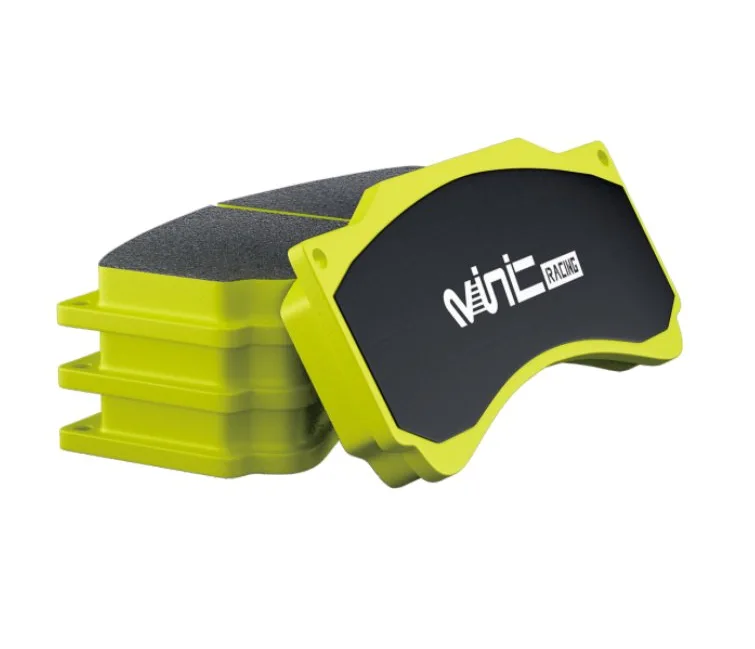
Recommended Track Setup
Sport Pads
The 850 °C compound for factory calipers and every VINIC forged caliper. Swap in for track weekends, bed them properly, and they will last the season.
RT Series Big Brake Kits
Forged 6-piston calipers with high-carbon rotors up to 420 mm — the thermal mass and clamping force serious track builds need.
New pads must be bedded before their first hard session — heat-cycling transfers an even pad layer onto the rotor, which is what actually prevents fade and judder. Read our full track day brake guide in the Guides section, and ask us for the bedding procedure with your quote.
Track Brake FAQ
Can I use racing brake pads on the street?
You can — the Sport compound is designed for dual street and track use and works from cold — but expect more dust and occasional noise. Most owners run our Street compound daily and swap to Sport pads for track weekends.
How do I bed in track brake pads?
A series of progressively harder stops from moderate speed, with cooling laps between, to build an even transfer layer on the rotor. Never come to a full stop with hot pads during bedding. We include the full procedure with every Sport pad order.
What actually causes brake fade on track?
Heat. Past its temperature ceiling the pad binder smears and friction falls away; keep pushing and the fluid boils next. A compound rated to 850 °C, high-carbon rotors and fresh fluid are the real fix — not a harder push on the pedal.
Do I need a big brake kit for track days?
Not to start — quality track pads, fluid and lines transform a stock system. But if you are cooking pads in a single session or fighting a long pedal, a forged BBK adds the rotor thermal mass and piston clamping force that pads alone cannot.
Get a Quote Built Around Your Car
Tell us your year, make and model — we confirm fitment first, then quote. No guesswork, no wrong parts.